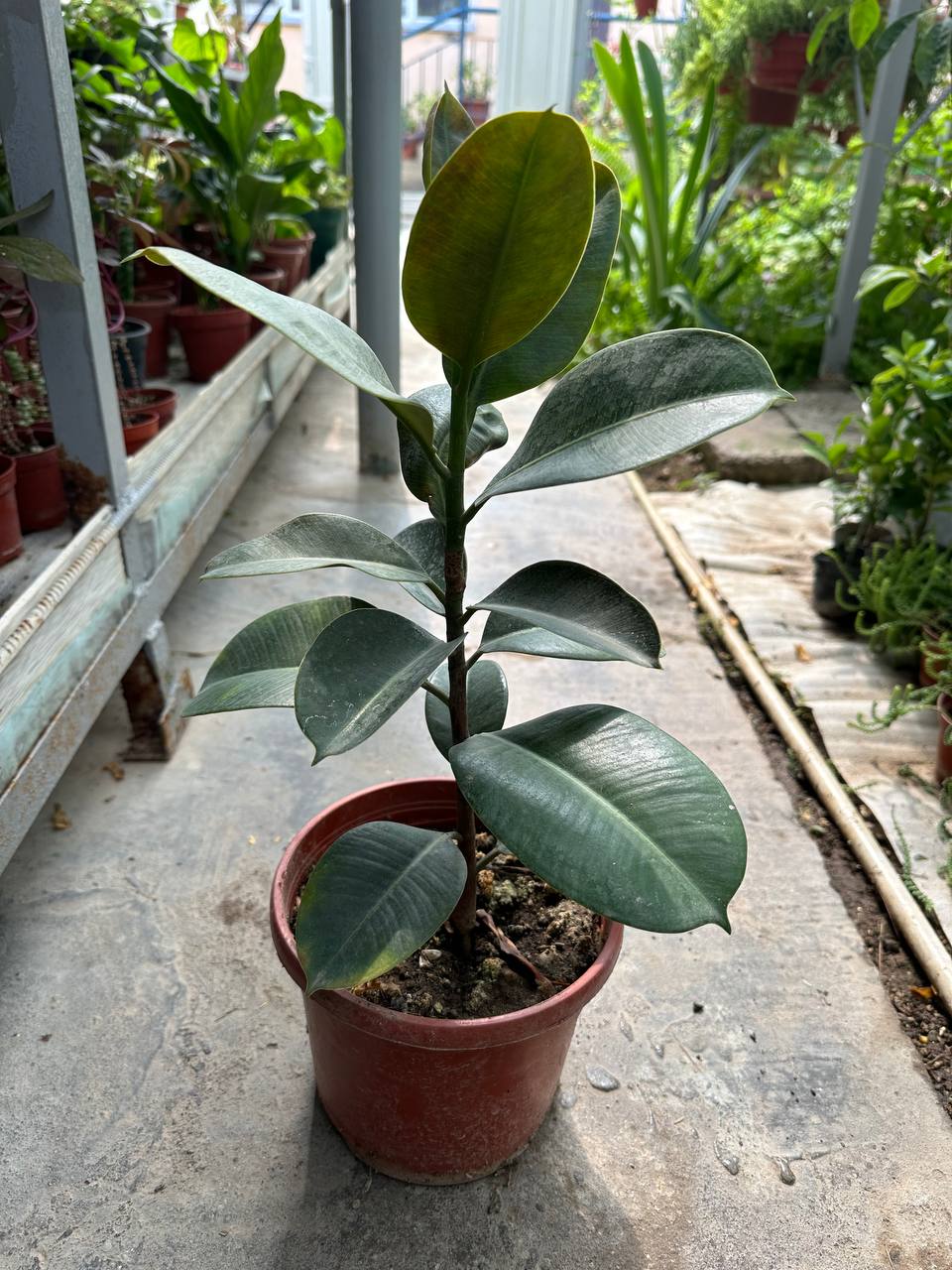
The leaves of a rubber plant look sturdy enough to ignore, which is exactly why dust can build up for months without anyone noticing. A thin grey layer does not seem serious, but it covers the surface where the plant collects light. Over time, the leaves may look dull, new growth may slow, and the plant seems to need more water than before. Cleaning the leaves is not just a styling task. It helps the plant work more efficiently and gives you a close look at its condition.
Start with lukewarm water and a soft cloth. Wring the cloth until it is barely damp, then support the underside of each leaf with one hand while you wipe the top with the other. Move from the stem toward the tip instead of scrubbing back and forth. A rubber plant leaf can be damaged by rough handling, especially where it joins the stem. If the dust has formed a stubborn film, use a second cloth rather than pressing harder. The goal is to lift the dust, not to polish the leaf.
Do not use furniture polish, cooking oil, or a heavy leaf shine product. Those coatings may look glossy for a day, but they can block the tiny openings on the leaf surface and attract more dust. A small amount of mild soap in water is usually unnecessary unless the leaf is sticky. If you do use it, wipe the leaf again with plain water and dry it gently. A clean leaf should have a natural sheen, not a greasy finish. Simple supplies make the job easier and safer to repeat.
The undersides of the leaves deserve the same attention. This is where small pests often gather before they spread across the plant. Look for fine webbing, white specks, sticky patches, or tiny brown bumps near the veins. If you find something, isolate the plant from others and inspect the nearby pots. A damp cloth can remove light surface debris, but a larger infestation may need a repeated cleaning routine. Early detection saves far more effort than waiting for the problem to become obvious from across the room.
The water you use can leave spots on dark leaves. Tap water with a high mineral content may leave pale marks after it dries. Filtered water or collected rainwater can reduce those marks, but the difference is mostly visual. Dry the leaf with a soft cloth after wiping if you want a clean finish. Do not leave water pooled in the growing point at the top of the plant. Standing water in that soft area can cause damage, and it invites rot in the new stem. Tilt the leaf slightly and remove any drops that collect.
Cleaning also gives you a chance to check the position of the plant. If one side of the rubber plant is dusty while the other is clean, that side may be facing a wall or a corner with less air movement. If the leaves lean toward the window, turn the pot a quarter turn after wiping it. A plant that receives light from one direction will gradually grow toward that source. Small turns every week or two keep the stem straighter and help every leaf receive useful light.
A rubber plant that collects dust quickly may also be sitting near a vent, a busy doorway, or an open kitchen. Fine particles settle on broad leaves more easily than on narrow ones. You can reduce the build-up by moving the pot a few feet away from the air source. Do not place it in a closed, stagnant corner just to keep the leaves clean. Gentle air movement helps the soil dry evenly and keeps the surrounding space fresh. The best position balances light, airflow, and household activity instead of solving one problem while creating another.
Make leaf cleaning a seasonal habit rather than a full afternoon project. Wipe the largest leaves when you water, then finish the smaller ones the following week. Check the undersides whenever you move the pot. If the plant is growing well, the new leaves will emerge clean and glossy, and the older leaves will remain useful for a long time when they are not covered in dust. A little attention each month keeps the plant looking cared for and helps you catch changes before they become difficult to correct.
When new leaves first appear, they are soft and easy to mark. Hold them gently and avoid wiping them until they have opened fully and the surface feels firm. A young leaf can tear at the midrib or lose its natural coating if you treat it like an older leaf. Wait a few days after it unfurls, then use the same soft cloth and light pressure. The routine should feel almost boring. That is how you know it is safe enough to repeat for years without harming the plant.